
Booth Sustainability Made Simple: Design an Eco-Friendly Trade Show Display That Cuts Waste and Costs
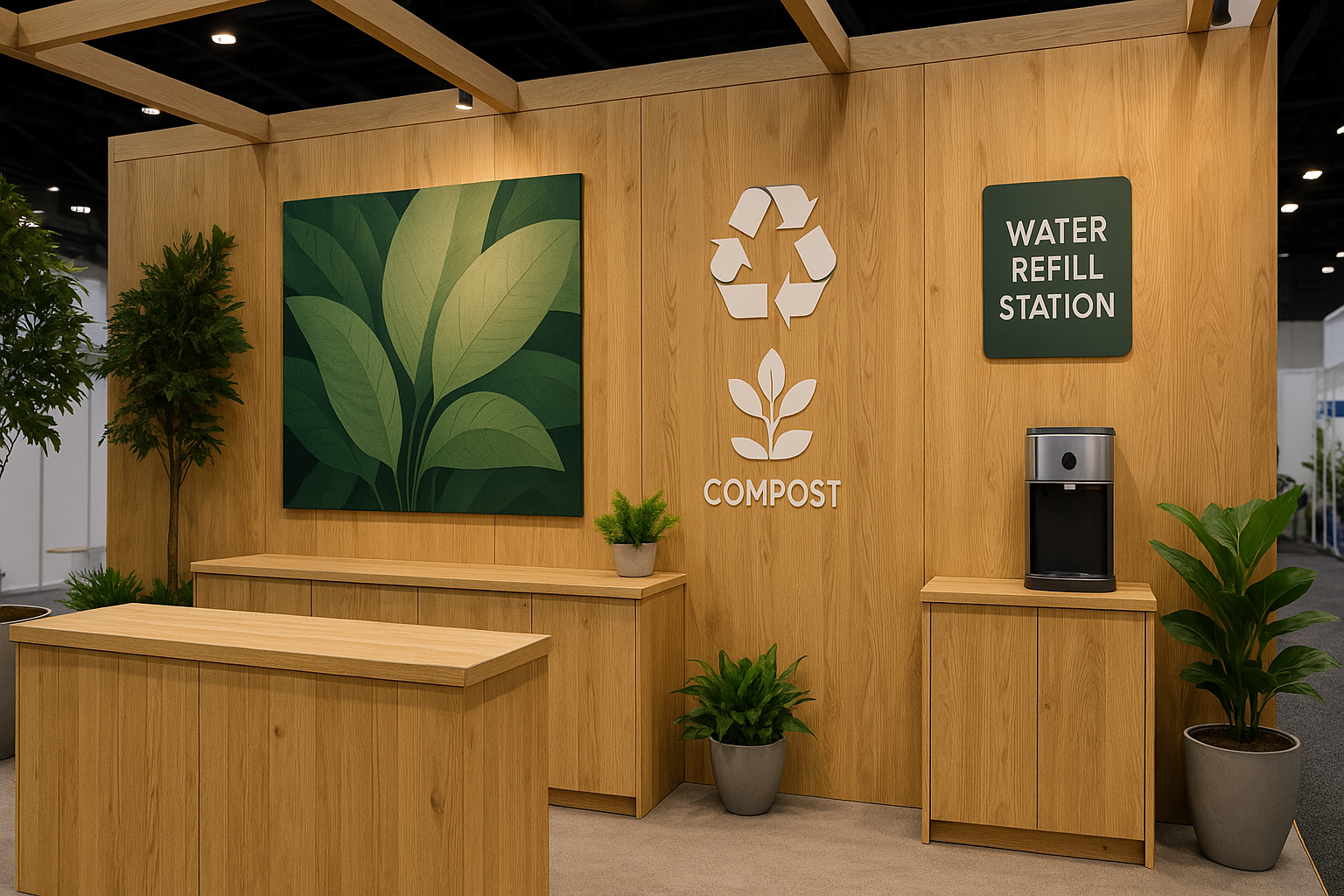
A simple, sustainable booth—modular wood, fabric graphics, live plants, and a water refill station—cuts waste and costs without sacrificing design.
Sustainable exhibit design is no longer a niche statement; it’s a practical way to reduce waste, control budgets, and strengthen your brand. A well-planned eco-friendly trade show display blends smart booth design ideas, durable materials, and disciplined logistics so your team looks retail-ready while lowering its carbon footprint. The goal isn’t to lecture attendees—it’s to create an exhibition booth that feels modern, premium, and environmentally friendly, then prove that the choices saved money.
A design mindset that pays for itself
Great sustainability starts in design, not at the loading dock. Treat the trade show booth like adaptable infrastructure: a custom aluminum or steel frame that reconfigures across footprints, with message changes pushed to fabric graphics and digital signage. When the message lives in replaceable textile skins or on screens, you reuse the structure show after show instead of landfilling rigid panels. That’s sustainable design and exhibit design working together—less reprint, less waste, lower carbon and fewer crates.
Inspiration can come from interior design and retail: clean lines, intentional lighting, and a palette that makes the product the hero. The outcome is a booth that feels premium without excess plastic or disposables.
Material choices that feel premium and sustainable
Choose substrates that balance longevity and recycling paths. Recycled-poly textile for walls and headers packs small, prints vivid colors, and can be reskinned seasonally. FSC paper-faced honeycomb and reinforced cardboard are light yet rigid for counters and risers; they collapse after the show and move into recycling streams. Use real wood details or bamboo trims where touch matters; they signal green building intent and outlast flimsy plastic laminates.
For the floor, consider interlocking tiles with recycled content or rental systems that eliminate single-use carpet. Thoughtful packaging—flat sleeves, paper inserts, minimal foam—keeps components pristine without creating a trash mountain during install.
Lighting, energy, and the carbon math
LED rails, strips, and backlit frames cut energy use while delivering high-CRI color so apparel and printed graphics read true. Fewer fixtures with better optics beat a ceiling full of hot spots. If your venue offers green-power options, opt in; your marketing team can credibly reference reduced carbon footprint in recaps. Dimmable zones let you adapt to hall brightness without extra rentals.
Graphics, signage, and brand clarity
Push campaign specifics to small, swappable pieces—counter cards, lightbox films, or digital loops so the big surfaces stay evergreen. Good graphic design makes sustainability invisible: tight typography, restrained color, and signage that guides attendees without clutter. When you must print rigid, keep finishes matte to avoid harsh glare that forces more lighting.
Logistics engineered for less waste
Sustainability is operational. Right-size crates so there’s no paid empty air; stage components in install order; and label everything with show name, booth number, and contact so the logistics team and drayage crews move quickly. A modular kit means fewer cases, faster installs, lower handling, and fewer emergency purchases. The quiet win is labor: calm buildouts avoid overtime and extra shipments that inflate carbon.
Swag and packaging that match the story
If you give gifts, keep them useful and durable—drinkware with stainless interiors, privacy tools, or refillable notebooks then package them with paper, not plastic clamshells. A single sentence on the sleeve (“rPET fabric, paper-based packaging, please recycle”) tells the sustainability story without preaching. Tie each item to a short URL so marketing can attribute meetings and leads to the physical program.
Measurement that proves the ROI
Track three lines each show: materials reused vs. replaced, recycling diverted by weight, and money saved through lighter shipping and faster install. Pair that with performance—scans, meetings, and post-show follow-ups—and sustainability becomes a growth strategy, not a cost.
Straight Answers Exhibitors Ask (Your Not-So-FAQ)
How do we make an eco booth look premium, not temporary?
Use durable structure with refined finishes—anodized frames, real wood accents, tension-fabric skins—and let graphics and lighting create drama. Premium is about composition, not excess.
Is cardboard really viable for an exhibition booth?
For counters, risers, and secondary walls, engineered cardboard and paper-honeycomb are strong, light, and recyclable. Combine them with metal frames where load-bearing matters.
What’s the fastest way to cut waste without redesigning everything?
Swap rigid prints for fabric trade show displays and digital content, standardize packaging to flat kits, and rent the floor. Those three moves cut crates, drayage, and trash bags immediately.
Do LEED or green-building principles apply on the show floor?
While you won’t certify a booth, LEED ideas—materials with recycled content, efficient lighting, and reduced carbon through reuse—translate directly. Document choices and outcomes for your ESG report.
Will attendees notice?
They notice clarity, comfort, and confidence. When your booth is open, bright, and purposeful—and your brand explains choices in one line—people engage longer and the story lands.
Bringing it together
Sustainability succeeds when it looks like great booth design. Modular structure, recycled textile skins, smart lighting, recyclable packaging, and disciplined logistics produce an eco booth that feels unmistakably custom. You’ll ship less, spend less, and show a credible commitment to sustainability—all while giving your marketing team a better canvas to win the conversation on the trade show floor.

