
Make Sustainability Your Competitive Edge on the Trade Show Floor
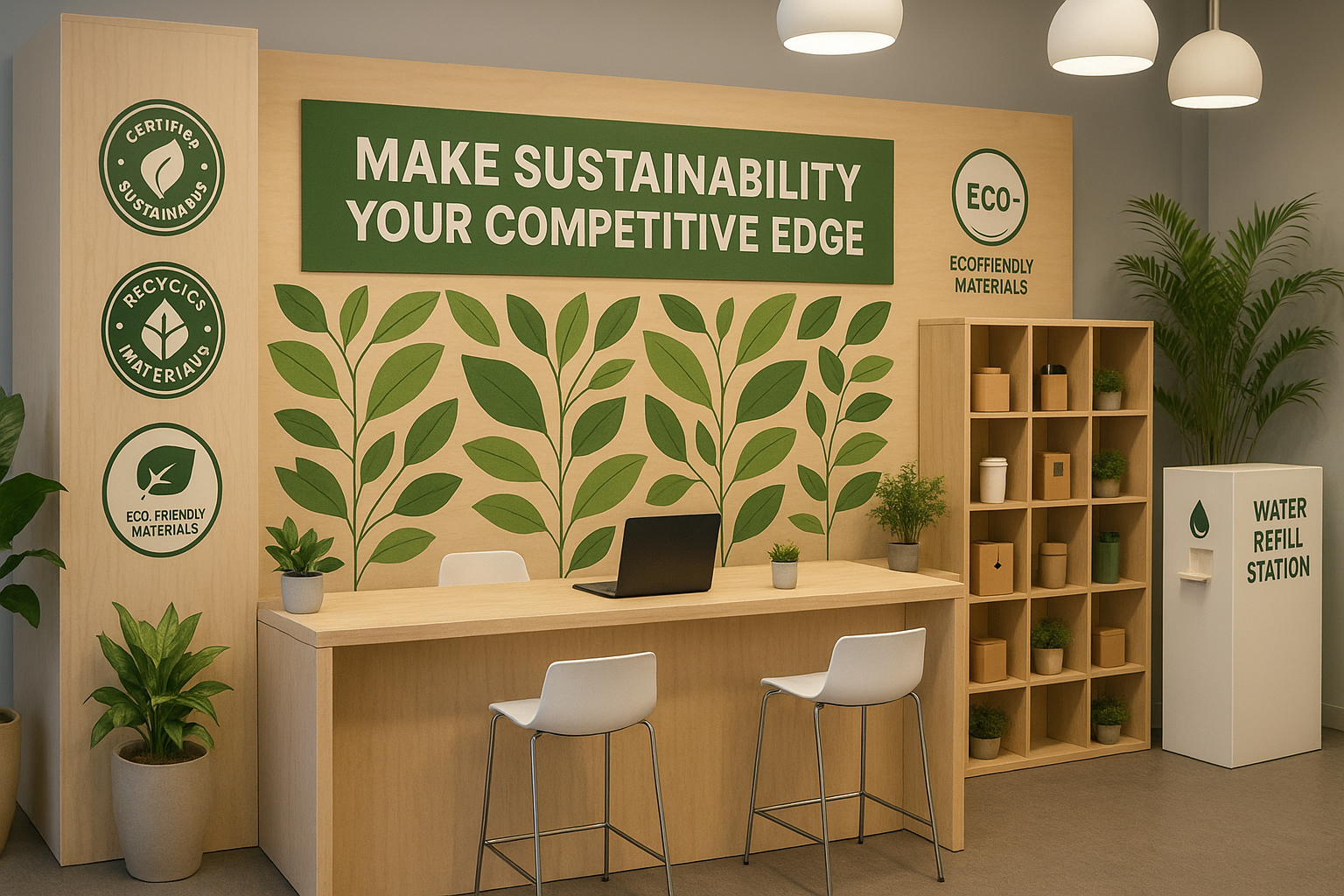
Natural wood, greenery, and refill stations turn sustainability into a crowd-drawing advantage on the trade show floor.
Sustainability isn’t a side project in the events industry, it’s a smarter way to design, ship, and operate that cuts cost while lifting brand perception. Done right, an environmentally friendly trade show booth becomes a high-performing asset: lighter to move through transport and logistics, faster to install, and stronger at brand storytelling. This guide shows how to build sustainable trade show displays that look premium, reduce carbon footprint, and give your marketing team credible proof of impact.
Start with a design that prevents waste (and looks premium)
Sustainable results start in design, not at the dumpster. Treat the booth as adaptable infrastructure—an exhibition booth built on a modular aluminum/steel frame with interchangeable skins—so you reuse the structure while updating campaigns. Push message changes to textiles and digital signage instead of reprinting rigid walls. The formula is simple: durable skeleton, swappable graphics, and restrained branding that reads retail.
Textiles: Choose recycled fiber (rPET) textile skins for headers and lightboxes; they print beautifully, pack small, and cut shipping weight.
Rigid elements: Where you need structure, specify FSC paper-faced honeycomb or engineered cardboard; reinforce edges with recyclable corners.
Natural finishes: Real wood trims or bamboo accents elevate the brand without plastic laminates, aligning with green building sensibilities and corporate social responsibility goals.
This foundation reduces waste, cuts crates, and shrinks the ecological footprint before logistics even begin.
Light efficiently, color accurately, and save energy
Lighting is where sustainable design and aesthetics meet. High-CRI LED rails and backlit frames lower energy use, run cooler on the trade show floor, and render color-critical graphics and apparel correctly—no extra fixtures, no excess heat. Use dimmable drivers to adapt to the hall brightness. If the venue offers renewable energy credits, opt in and record the kWh offset as part of your environmental impact report.
Smarter packaging and logistics (less carbon, fewer headaches)
Most booth waste is born in packaging and poor logistics. Engineer both:
Right-size cases: Eliminate paid empty air; standardized footprints stack cleanly in the warehouse and during transport.
Paper first: Replace foam with paper-based trays and corrugate dividers; choose soy inks on sleeves; design inner packs to reduce waste and improve recycling streams.
Clear labels: Show name, company, booth number, “Box X of Y,” and a mobile contact on multiple faces. Precise labels speed material handling and cut rework.
Local where it matters: Producing heavy or fragile pieces in-market trims miles, water use, and greenhouse gas emissions across the supply chain.
Results: fewer crates, lower freight, faster installs, and measurable carbon reduction.
Build a circular plan for materials and construction
A credible sustainability story lives in a circular economy mindset: reuse, repair, recycling, and thoughtful end-of-life.
Re-skin, don’t rebuild: Keep the structure and replace only the fabric skins for new campaigns.
Repair kits: Stock spare fasteners, connectors, and edge trim so you can fix rather than replace.
Responsible disposal: Partner with local recyclers for corrugate, metals, and accepted textiles; catalogue what each venue actually recycles so you sort correctly.
Donation: Unopened basics (notebooks, pens, tote bags) can leave a positive impact beyond the event when donated.
Record weights diverted from the landfill and add them to the recap.
Graphics and signage that work harder with less print
Move campaign specifics to swappable pieces—counter cards, lightbox films, and screen loops—so large surfaces stay evergreen. Great graphic design and signage reduce clutter and tell a clearer brand story. Keep finishes matte to avoid glare (which often drives over-lighting and extra energy use). Where you do print, standardize sizes across shows to reuse frames and inserts.
Giveaways that act like media (not landfill)
An effective marketing strategy treats giveaways as channels, not souvenirs. Choose fewer SKUs with real utility and long life:
Stainless water bottle with tight lid (paper sleeve, not plastic clamshell).
Recycled paper notebook with a metal pen.
Privacy tools or braided USB-C cables in a flat paper pouch.
Each item gets a concise line about materials and a QR code to a mobile page—book a demo, request pricing, or download a guide. That link converts “giveaway” into measurable engagement while curbing over-consumption. If an item won’t be used 20+ times, it doesn’t belong in your kit.
Experience and interior design cues that welcome attendees
Sustainable booth design is also hospitality. Use breathable materials and an uncluttered floor plan to keep aisles open and comfortable. Provide a refill station and a small plaque noting water stewardship. Seating? Consider rental or modular stools that pack flat. Clear signs (“Scan to learn more,” “Ask for a demo”) direct traffic without piles of brochures, reducing plastic and paper waste. Eco-friendly swag is also essential.
Policy, measurement, and how you tell the story
Publish a short, plain-English policy at the counter: recycled textiles, paper-based packaging, LED lighting, local production, and post-show recycling/donation. Then measure:
Footprint metrics: crates reduced, miles avoided, pounds recycled, estimated carbon footprint reduction.
Operations: install hours saved, overtime avoided, damaged pieces repaired vs. replaced.
Marketing: scans, meetings, and follow-ups per surface or item (via unique QR code or vanity URL).
Fold these into your recap so leadership sees sustainability as an investment with pipeline impact, not just a cost line.
Attendee engagement without the waste
Replace stacks of brochures with a clean digital signage loop and scannable content. Use “scan for the spec sheet” calls instead of handouts—better data, less waste. Keep giveaways behind the counter; offer them when a conversation earns them. Your team will protect inventory, and the program will align to outcomes rather than volume.
Compliance, venues, and organizational readiness
Align sustainability with policy and operations across your organization:
Train staff on materials, recovery steps, and why choices matter.
Confirm venue rules on recycling and sustainable event options.
Coordinate with show services on waste streams and end-of-show donation pickups.
Build a shared folder with specs, vendor contacts, and accepted materials per hall so the plan is repeatable.
Consistency across events builds credibility with trade show industry partners and attendees.
A practical timeline you can copy
T-8 weeks: Lock modular layout; pick rPET textiles; confirm LED plan; define two hero giveaways and one aisle item; shortlist local suppliers.
T-6 weeks: Approve graphics; standardize packaging; confirm recycling/donation partners; publish the measurement plan (what you’ll track and how).
T-4 weeks: Produce locally where it trims miles; ship structure to the advance warehouse; finalize digital signage content; print swappable films/cards.
T-2 weeks: Photo proofs of finished items; stage flat kits; label cases and crates; train staff on the sustainability policy and recovery steps.
Move-in: First-open crate → power/lighting → headers → counters → QC → inventory staged by day and audience.
Show days: AM restock, midday count, PM reconcile; log quick notes on what visitors engage with; keep aisles tidy.
Tear-down: Stage recycling and donation, tag repairs, photograph pallets and recovery bins, and close the loop with your carrier.
+48 hours: Launch follow-ups tied to scans; publish the waste + cost + marketing results in a one-page recap.
Frequently Asked Questions
What are the benefits of using sustainable materials for trade show booths?
Using sustainable materials for trade show booths not only reduces environmental impact but also enhances brand perception. Sustainable materials, such as recycled textiles and FSC-certified wood, can lower costs associated with shipping and waste disposal. Additionally, they contribute to a positive brand image, appealing to eco-conscious consumers and stakeholders. By showcasing a commitment to sustainability, businesses can differentiate themselves in a competitive market, potentially leading to increased customer loyalty and engagement.
How can I measure the sustainability impact of my trade show booth?
Measuring the sustainability impact of your trade show booth involves tracking various metrics, such as the amount of waste diverted from landfills, the carbon footprint reduction achieved through efficient logistics, and the use of sustainable materials. You can also assess operational efficiencies, like reduced installation time and labor costs. Documenting these metrics in a post-event report can help demonstrate the effectiveness of your sustainability efforts to stakeholders and guide future improvements.
What are some eco-friendly alternatives to traditional trade show giveaways?
Eco-friendly alternatives to traditional trade show giveaways include items that are practical and reusable, such as stainless steel water bottles, recycled paper notebooks, and biodegradable promotional products. These items not only reduce waste but also provide value to attendees, encouraging them to engage with your brand. Additionally, consider incorporating QR codes on giveaways that link to digital content, allowing for a more sustainable approach to marketing while minimizing physical materials.
How can I ensure my trade show booth design is adaptable for future events?
To ensure your trade show booth design is adaptable for future events, focus on a modular design that allows for easy updates and reconfiguration. Use a durable frame that can support interchangeable graphics and signage, enabling you to refresh your messaging without a complete overhaul. Additionally, select materials that are versatile and can be reused across different campaigns, which not only saves costs but also aligns with sustainable practices.
What role does lighting play in sustainable trade show design?
Lighting plays a crucial role in sustainable trade show design by enhancing aesthetics while minimizing energy consumption. High-CRI LED lighting is energy-efficient and provides accurate color rendering, which is essential for showcasing products effectively. Incorporating dimmable lighting allows for adjustments based on the venue's brightness, further reducing energy use. By choosing sustainable lighting options, you can create an inviting atmosphere while contributing to your overall sustainability goals.
How can I engage attendees without creating waste at trade shows?
Engaging attendees without creating waste can be achieved by utilizing digital tools and interactive experiences. Replace printed materials with digital signage and scannable QR codes that provide information and resources. Offer giveaways only when meaningful interactions occur, ensuring that items are valued and used. Additionally, create a clean and inviting booth layout that encourages conversation and interaction, reducing the need for excess promotional materials.
What steps can I take to align my trade show strategy with sustainability policies?
To align your trade show strategy with sustainability policies, start by training your team on sustainable practices and the importance of eco-friendly choices. Confirm the venue's recycling and waste management policies to ensure compliance. Develop a clear sustainability plan that outlines your goals, materials, and logistics. Regularly measure and report on your sustainability metrics to demonstrate progress and make adjustments as needed, fostering a culture of sustainability within your organization.
Bringing it all together
A sustainable booth isn’t about perfection; it’s about deliberate choices that lower environmental impact while elevating your brand. Modular structure, recycled textile skins, LED lighting, paper-based packaging, circular reuse, smarter logistics, and measurable outcomes transform your presence from “nice display” to a credible, eco-forward solution. The payoff is real: fewer crates, lighter freight, faster installs, lower carbon, and a clearer marketing story that resonates with modern attendees and decision-makers across trade shows.

