
International Exhibitor Guide to Las Vegas Logistics & Swag Fulfillment
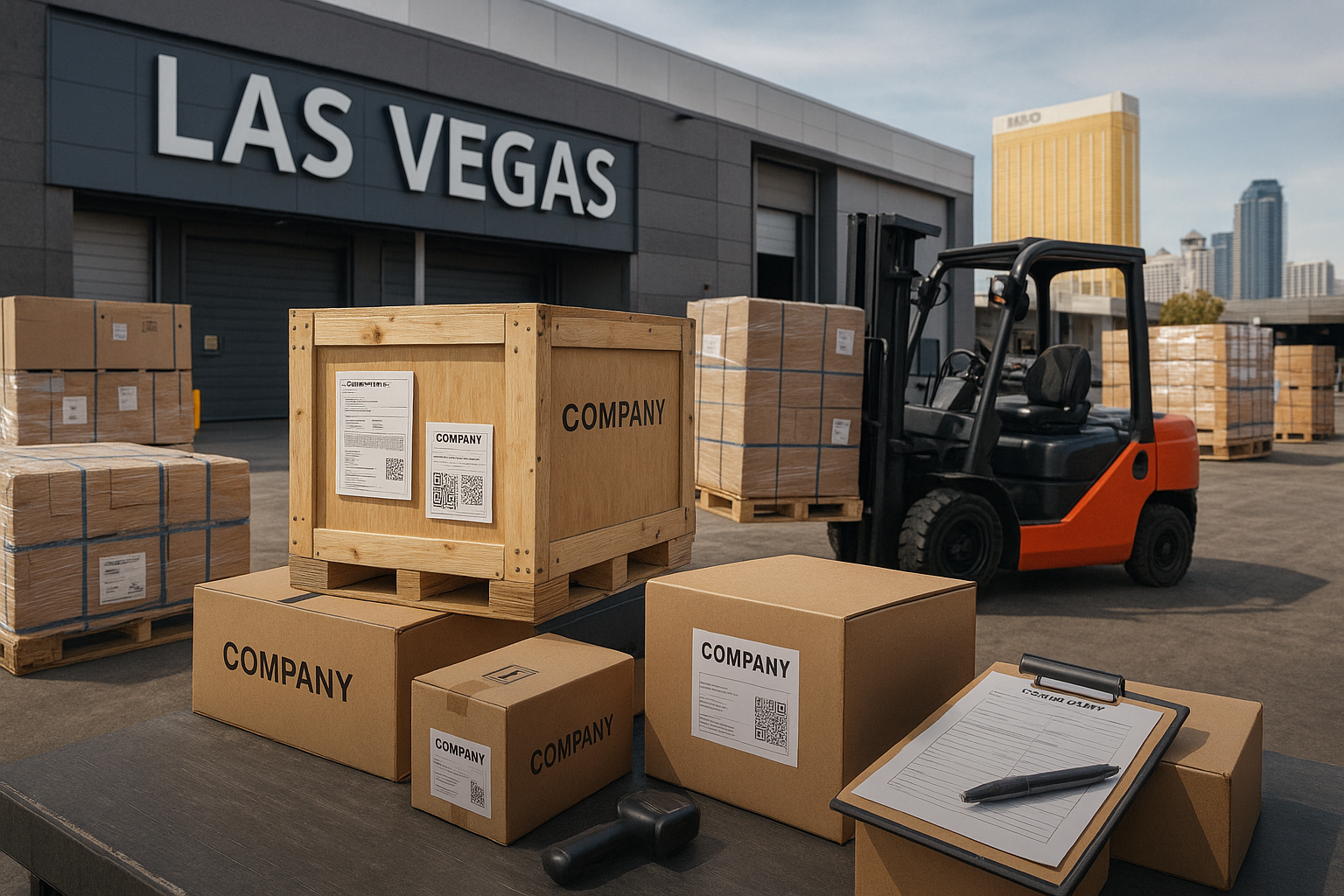
Crates, pallets, and clearly labeled boxes staged outside the convention center—this is the real workflow behind smooth Las Vegas exhibiting and on-time swag fulfillment.
Las Vegas trade shows run on precision. The scale of the trade show industry in this city, CES, SEMA, NAB Show, KBIS, MAGIC trade show Vegas, Pack Expo Vegas, Vegas Furniture Show, ASD Show Vegas, Vegas Conexpo, the Vegas Gift Show, and more, means docks, marshaling yards, and targeted move-in windows operate like clockwork. For an international exhibitor, success depends on choices you make weeks earlier: which trade show shipping services to use, whether to route freight to the advance warehouse or direct to the show, how to handle customs with a Carnet, and how to control transportation costs and overtime charges once you hit the show floor. This guide gives you a practical, Vegas-specific path from planning to return shipment, while tying every physical decision to measurable outcomes.
Why Las Vegas plays by different rules
Three venues dominate: Las Vegas Convention Center, Mandalay Bay, and The Venetian Expo. Each show appoints a trade show services general contractor that controls docks, material handling (drayage), install & dismantle labor, electrical, rigging, and warehousing of empties. You don’t ship to “a building”—you ship into a system with strict shipping requirements. Your carrier checks into a marshaling yard, is dispatched to the dock inside your window, and freight is delivered to your trade show booth location by booth number. That choreography is why mislabeled cartons, missing BOL/lading, or fuzzed weights cause delays and fees just as fast as a late truck.
International teams benefit from a conservative spine: route structures, graphics, and exhibit materials to the advance warehouse; hand-carry day-one essentials (laptops, scanners, VIP kits). The warehouse absorbs airline and customs variability, ensuring your banner stand, tension fabric display, and backlit headers actually arrive when crews are ready.
Advance warehouse vs direct-to-show (and how 3PLs help)
The advance warehouse receives freight one to three weeks before move-in, verifies counts, and stages for your targeted window. You pay handling, but you buy certainty. Direct to show reduces pre-show storage, but raises risk: missed appointments at the marshaling yard, traffic, and re-routing can trigger overtime charges and delays. A seasoned 3PL or exhibit service provider can blend both: heavy booth materials to the warehouse, a light truckload of replenishment timed to your second day, and on-site warehousing for daily storage needs.
Ask your logistics team to prepare a mode mix: LTL for durable pieces in shipping cases, truckload if you’re moving a full set of exhibit materials, and small-parcel for last-minute literature. On the carrier side, Vegas docks regularly see national lines like ABF, ArcBest, YRC, and specialty trade show shippers; whoever you choose, insist on a single, readable shipping label template, correct NMFC classifications, and a clean BOL that references your show name and booth number.
Customs, Carnets, and paperwork that travels
If gear returns home, use an ATA Carnet; it’s the simplest “passport” for temporary imports. Consumables, swag, and brochures—should enter on a commercial import with duties paid. Your commercial invoice should list seller/consignee, HS codes, country of origin, Incoterms, line-item descriptions (“wireless chargers—no battery” vs “logo power bank—battery included”), accurate counts and weights, and honest values. Pair a show-savvy forwarder with a broker and ask for a single itinerary from export pickup to advance warehouse check-in. That calendar drives your trade show planning.
Drayage, installation, and avoiding preventable fees
Material handling charges per hundredweight on anything crossing the dock. It’s not carrier freight; it’s the service that takes freight from the dock to the booth. Engineer against waste: palletize cartons, avoid odd shapes, and weigh honestly. Tape a power map inside your first-open crate. Stage graphics by elevation so decorators spend time installing, not hunting.
On install: union crews handle structures, rigging, and electric. Your team may hand-carry small items, but plan labor like a project. If you must work late, assume overtime charges; booking at advance rates is still cheaper than last-minute orders. A disciplined morning rhythm - open, restock, count; midday cycle count; close, replenish, prevents surprise outages when the hall is busiest.
Swag fulfillment and measurement (so it performs like marketing)
Local sourcing reduces risk; importing can reduce unit cost. Many international exhibitors adopt a hybrid: import hero pieces for meetings, source high-volume handouts in the U.S. so you can reorder mid-show. Keep kitting flat and modular; thin sleeves stack in counters and reduce drayage. For retail polish, use recyclable boards and neat compartments; sustainability doesn’t require a manifesto, just credible materials.
Every physical item should behave like a channel. Print a small card with a clean QR that lands on a fast mobile page—book, request pricing, or download. Tag by surface and SKU so post-show reporting tells you which item, which placement, and which day generated real conversations. That’s how a simple banner stand card or VIP kit proves more valuable than a bigger shipping case.
Budget realism: transportation costs and hidden lines
A Vegas budget has predictable pillars: international freight, brokerage and duties, domestic LTL/truckload to advance warehouse, drayage, labor, electrical/rigging, internet, kitting, return shipping, and incidentals. Protect yourself with buffers: heavy shows creep in weight; install schedules slip; neighboring lighting can force adjustments. A candid pre-show review with your logistics team and consultation services vendor keeps transportation service and shipping costs anchored to reality.
A practical six-week operating cadence
At six weeks, freeze layout and power, pick shipping service modes, and lock SKUs. At five, order services at advanced rates and approve graphics. At four, crate and ship to advance warehouse inside the target window; photograph pallets, verify counts. At three, confirm warehouse check-in, test QR flows over mediocre hall Wi-Fi, and finalize staff scripts. Two weeks out, train on lead capture and inventory rules. In show week, keep VIP kits behind the counter, aisle handouts up front, and your daily counts on a simple sheet. Within 48 hours of close, launch follow-ups and book the return shipment with a verified BOL and labels.
Vegas show landscape (context matters)
Seasonality drives congestion and rates. During trade show season, capacity tightens around CES, SEMA Show Vegas, NAB Show, and big construction/innovation expos. If you’re exhibiting at Mandalay Bay during Pack Expo Vegas week, while another hall hosts Vegas trade shows back-to-back, book earlier and split freight so a delay doesn’t stall your opening.
Straight Answers Exhibitors Ask
Do we really need the advance warehouse?
If you’re international or shipping mixed trade show materials, yes. The advance warehouse absorbs airline delays and customs holds so your exhibit materials are staged when labor is ready. Direct-to-show is viable for one tight LTL with perfect timing—rare during peak Las Vegas trade shows.
Is parcel cheaper than LTL because drayage is scary?
No. If a carton crosses the dock, material handling applies. Parcel helps for true hand-carry or small replenishments, but it doesn’t eliminate drayage.
How do we keep transportation costs predictable?
Lock modes early (LTL for mixed freight, truckload for full sets), publish a single shipping label template, and use correct NMFC classes. Demand weight tickets from carriers like ABF, ArcBest, or YRC and reconcile against GC scales.
What’s the fastest way to lose money on site?
Late orders, unlabeled freight, and unmanaged inventory. Overtime charges during install, surprise add-ons for power, and last-minute graphics reprints add up fast.
Where should we keep VIP kits?
Behind the counter, labeled by day, with AM/PM counts. A visible cart add or open tray is for aisle items only. Treat kits as performance media, not souvenirs.
How do we handle return shipping?
Prep return shipping labels and a BOL before the final show day. Stage empties cleanly, place “EMPTY” stickers, and confirm your return shipment pickup window with both the GC desk and your shipping service.
Closing perspective
Las Vegas rewards exhibitors who plan like operators. Choose the advance warehouse when risk is high, use an exhibit house that understands trade show shipping services, label everything, and align your budget to the true shipping costs, material handling, and labor reality of the city. Treat every trade show shipper decision, every shipping case, and every VIP kit as part of one system: move goods in on time, keep crews productive, and turn trade conversations into pipeline. When the physical program behaves like media and the logistics team measures like marketers, your show week stops being a gamble and becomes a repeatable win.

